Pharmacological groups:
Species:
Manufacturer:
Form of the drug:
Detailed description
Feline Rhinotracheitis-Calici-Panleukopenia-Chlamydia Psittaci Vaccine
Modified Live Virus and Modified Live Chlamydia
For use in cats only
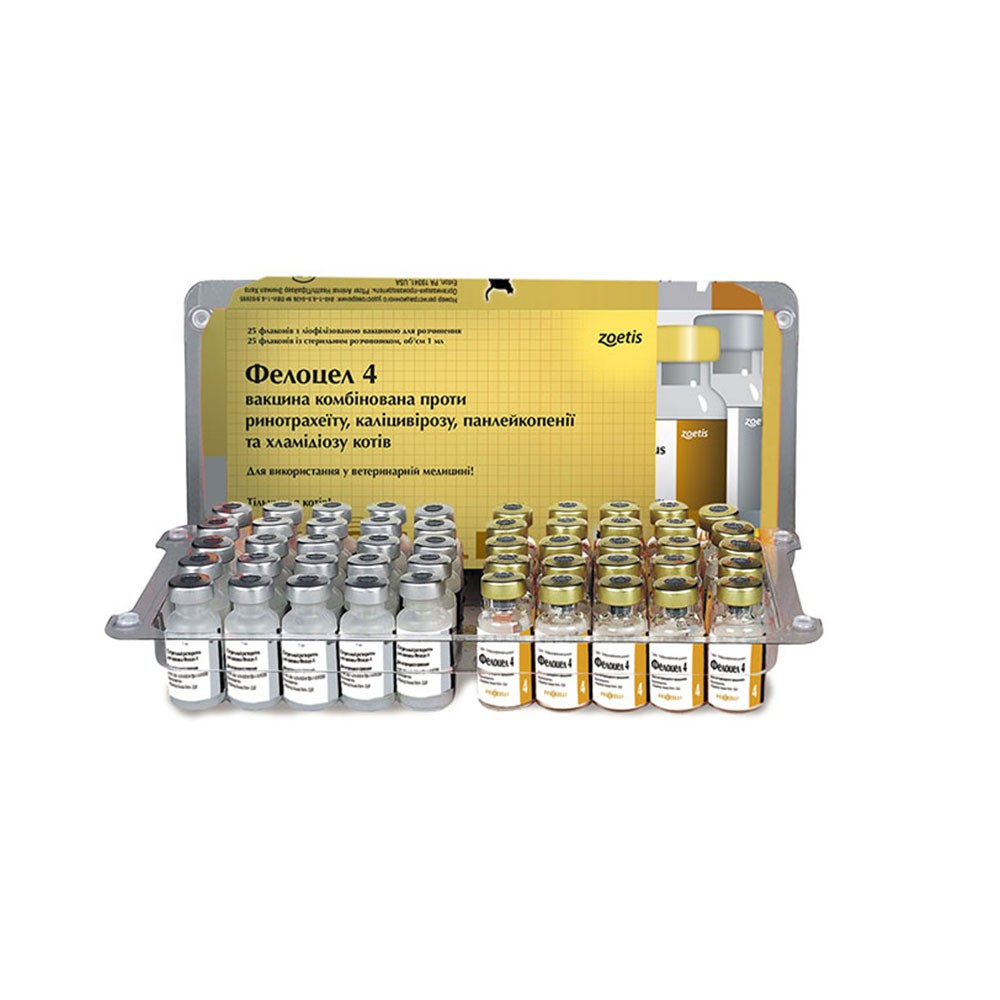
PRODUCT DESCRIPTION: Fellocell 4 is for vaccination of healthy cats as an aid in preventing feline viral rhinotracheitis (FVR) caused by feline herpesvirus-1, feline respiratory disease caused by feline calicivirus (FCV), feline panleukopenia caused by feline parvovirus (FPV), and feline chlamydiosis caused by Chlamydia psittaci. Fellocell 4 contains attenuated strains of feline rhinotracheitis virus, calicivirus, and panleukopenia virus (Johnson Snow Leopard strain), and C. psittaci, propagated on established cell lines. Fellocell 4 is packaged in freeze-dried form with inert gas in place of vacuum.
Directions For Use
General Directions: Vaccination of healthy cats is recommended. Aseptically rehydrate the freeze-dried vaccine with the sterile diluent provided, shake well, and administer 1 mL intramuscularly or subcutaneously.
Primary Vaccination: Healthy cats 12 weeks of age or older should receive 2 doses administered 3-4 weeks apart. Cats vaccinated at less than 12 weeks of age should be revaccinated at 12 weeks of age.
Revaccination: Annual revaccination with a single dose is recommended, although, as recommended by the American Veterinary Medical Association and its Council on Biologic and Therapeutic Agents, the attending veterinarian should determine the frequency of revaccination based on the animal’s lifestyle and risk of exposure.4
Precautions
Store at 2°-7°C. Prolonged exposure to higher temperatures and/or direct sunlight may adversely affect potency. Do not freeze. Use entire contents when first opened.
Sterilized syringes and needles should be used to administer this vaccine. Do not sterilize with chemicals because traces of disinfectant may inactivate the vaccine.
Burn containers and all unused contents.
Contains gentamicin as preservative.
Vaccination of pregnant queens should be avoided.
The use of this product has been associated with fever, anorexia, and lethargy in 1% of vaccinated cats, often occurring in clusters in association with multiple concurrent vaccinations. The onset is typically delayed 7-21 days after vaccination. Symptoms may persist for 3-30 days with an average of 12 days after onset. Veterinary intervention may be required. When treatment is necessary, supportive care, steroids, and antibiotics have been utilized.
In case of anaphylaxis, administer epinephrine or equivalent.
In case of accidental human exposure, consult a physician.